Tag Archives: MLB

Sacrifice of D-Day Still Resonates 76 Years Later

June 6 marked the 76th Anniversary of D-Day, which is the name given to the World War II battle involving over 156,000 American, British and Canadian forces landing on five beaches along a 50-mile stretch of the heavily fortified coast of France’s Normandy region in one of the largest amphibious military assaults in history.

With all that is going on in the world today, it can be easy to forget about things that happened so long ago. However, it is during times like these that the need to remember, and learn from history, is even more important. History does not happen in a vacuum, and failing to learn from it can lead to serious consequences.

On June 6, 1944 Allied forces invaded the beaches of Normandy in what would become known as D-Day.
Photo R. Anderson

Led by Supreme Allied Commander General Dwight D. Eisenhower, D-Day consisted of the Allied forces storming beaches at Normandy code named Sword, Juno, Gold, Utah and Omaha.

The storming of the beaches was met by German machine gunners and artillery who tried to hold back the invasion force. The German forces almost succeeded at Omaha, costing the Allies more than two thousand casualties in the opening hours of the battle.

For an idea of just how gruesome this type of frontal beach assault is, one need only watch the opening sequence of Saving Private Ryan. It is easy to forget in this era of drone attacks and smart bombs, that war was once much more hand to hand, leading to much higher casualty rates among its participants.

In total, the Battle of Normandy lasted from June 1944 to August 1944 resulting in the Allied liberation of Western Europe from Nazi Germany’s control. The battle has been called the beginning of the end of war in Europe.

Allied troops used boats like this one at the National World War II Museum in New Orleans on D-Day.
Photo R. Anderson

During the D-Day invasion, all scheduled Major League Baseball games were canceled marking only the second time in MLB history that games were cancelled league wide.

The first cancellation of MLB games happened on the day U.S. president Warren Harding died in 1923.

The third time was when Commissioner Bud Selig stopped play for six days from Sept. 11-16, 2001, following the terrorist attacks of September 11th. Although the start of the 2020 MLB season has been delayed by two months and counting, technically the games have not been cancelled, and are merely postponed.

Two future MLB Hall of Famers, Yogi Berra and Leon Day, participated in D-Day. According to the National Baseball Hall of Fame, 35 Hall of Fame members, including Ted Williams, and more than 500 MLB players served in World War II.

Unfortunately, the time to thank a World War II veteran in person for the sacrifices they made on those beaches over 70 years ago is vanishing rapidly.

According to the US Department of Veterans Affairs, 389,292 of the 16 million Americans who served in World War II were alive in 2019. The United States Veteran’s Administration estimates that a World War II veteran dies around every two minutes. With each death of a WWII vet a piece of history is lost.

The COVID-19 virus effects the elderly at a disproportionate rate, meaning that the loss of WWII veterans could be sped up. Thankfully, there are stories of WWII vets who have made full recoveries from COVID-19 proving that they really are members of the “Greatest Generation.”

Unfortunately, even the greatest generation cannot win the battle against time over the long run. By the year 2036, the VA estimates, there will no longer be any living World War II veterans. For comparison purposes, the last World War I veteran, Frank Buckles, died in February 2011.

When Uncle Sam called them, Members of the Greatest Generation answered. Unfortunately, even the greatest generation cannot win the battle against time over the long run. By the year 2036, the VA estimates, there will no longer be any living World War II veterans.
Photo R. Anderson

Thanks to the efforts of organizations like the National World War II Museum in New Orleans, the stories of the veterans of WWII have been captured to ensure that they can be told long after the men and women who fought to free the world from tyranny are no longer with us.

It is likely, and hopeful, that the world will not see another war of the scale of World War II. While there will always be a need for a certain number of boots on the ground, advancements in technology have greatly reduced the number of boots required to conduct modern warfare.

But while the number of soldiers needed to protect freedom will continue to decline in the coming years, that does not minimize the level of sacrifice made by each of the soldiers who wear the uniform.

The example of D-Day shows us what happens when men and women from all walks of life unite against a common foe in order to seek an outcome that improves life for everyone. Every inch of sand that was captured on the beaches of Normandy involved a sacrifice the likes of which the world will hopefully never see again.

But, when they were asked to make that sacrifice, the soldiers on the front lines charged ahead for the greater good. That united we stand, and divided we fall outlook on life can be hard to see at times, but it is in the DNA of each and every one of us.

Thanks to the efforts of organizations like the National World War II Museum in New Orleans, the stories of the veterans of WWII have been captured to ensure that they can be told long after the men and women who fought to free the world from tyranny are no longer with us.
Photo R. Anderson

Sadly, many images on the news the last few weeks have shown both unity for a cause, as well as armed resistance against the cause.

Television screens have been full of images of protests for social justice, and law enforcement entities clashing in cities across America. Now more than ever it is important to cling to the ideals of finding common ground and working together versus battling against each other.

So, take some time before the start of the hustle and bustle of the weekend to remember the sacrifice made on D-Day that helped maintain freedom, and reflect on the high cost of freedom paid by each generation that has gone before.

And by all means if you happen to see a World War II veteran, or any other veteran for that matter, be sure to thank them for their service and their sacrifice.

And, wear a mask when you see them as a show of respect for that sacrifice when you are out and about. The veterans of World War II are already dying at a rapid rate, the last thing any of us should want to do is hasten their demise by infecting them with COVID-19. Storming a beach when people are shooting at you is difficult. Wearing a mask to honor the people who charged when the bullets were flying is a very simple thing to do.

Honor their sacrifice by honoring them and protecting them. They showed they would do the same for each of us when they secured our freedom one inch of sand at a time.

Now if you’ll excuse me, I have a museum visit to plan.

Copyright 2020 R. Anderson

Baseball is Still Trying to Save Season as Other Sports Hit Cruise Control

As Major League Baseball’s owners and players continue to haggle over the parameters of what a 2020 season would look like in terms of number of games played and percentage of compensation, NASCAR and IndyCar are up and running, and the NBA is about to be up and running.

NASCAR which became the first major professional sports league to return to action last month, is set to hit another milestone on June 14 when it allows some fans into the track to see the action in person. Welcoming of fans into the facility comes with restrictions, and is also occurring during a time when nearly half of the states in the United States are seeing the number of cases of COVID-19 go up. It is also occurring as other states are being questioned about whether they are providing an accurate count of the total number of COVID-19 cases within their communities.

Make no mistake, these are truly uncharted waters, and the entire process is just one big wave away from capsizing faster than the ship in The Poseidon Adventure. Still, for many it is full steam ahead, into the great wide open.

The fact that other sports leagues are resuming their interrupted seasons is placing added pressure on MLB to start their 2020 season, which was originally scheduled to begin on March 26. While the main issues preventing the MLB from playing ball seem to be mostly financial, not all of the players are being affected the same way.

Established MLB players, and recently drafted Minor League Baseball (MiLB) players, can easily sit out the season if it comes down to it since for the most part their jobs are safe.

The fact that other sports leagues are resuming their interrupted seasons is placing added pressure on MLB to start their 2020 season, which was originally scheduled to begin on March 26.
Photo R. Anderson

For other players, a lost season could cost them their last chance to make it onto a Big-League roster and leave the long bus rides of MiLB behind.

I have been thinking a lot about those players in both affiliated and independent baseball lately. As I have noted several times before, I cut my Ballpark teeth by mostly watching Southern League baseball when I was growing up. In recent years, despite being located closer to an MLB Ballpark, than an Independent League Ballpark, I have found myself driving the extra 20 minutes and spending more time watching the Sugar Land Skeeters of the Atlantic League of Professional Baseball (ALPA) than the Houston Astros.

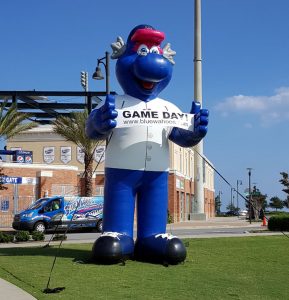
Nothing says Ballpark fun quite like a mascot adjacent box seat near the dugout. Isn’t that right Swatson?
Photo R. Anderson

For me, Minor League Baseball is a purer form of the game and allows me to be closer to the field for the same price as a nosebleed ticket at an MLB Ballpark. With Minor League Ballparks being about a third of the size of their Major League counterparts, one can really get up close and personal to the action.

Unfortunately, those Minor League players that I enjoy watching the most are the ones who are finding uncertain futures, as well as uneasy presents. To their credit many MLB teams and players have offered to pay the salaries of the players in their farm systems. However, with efforts to reduce the number of MiLB teams, as well as reducing the number of players drafted, in the coming years, there will be far fewer people who will get to chase their dreams of making it to the Show.

Of course, less affiliated Minor League baseball should mean an uptick in players wanting to play Independent League baseball which may lead to the rise of new leagues and teams to fill the void left behind following any contraction of affiliated baseball.

When I was in high school, I had a friend who was a star pitcher on the school baseball team. The team made it to the state playoffs my junior year. The following year, it was not uncommon to see various pro scouts in the stands.

My friend was a southpaw pitcher, which was then, and continues to be a hot commodity sought after by many MLB clubs. My friend ended up signing with the New York Yankees in the second round of the MLB June Amateur Draft right out of high school and as Tom Petty would say, “the future was wide open.”

Setbacks on the field, as well as off the field, led him to bounce around the Minor Leagues like a fan trying to reach first base in a dizzy bat race. My friend spent six years in the Yankees organization and never advanced above AA ball, as well as playing four years of Independent League baseball. Over 10 seasons he had a career .513 winning percentage, and a career 4.32 earned run average (ERA). After 10 years of chasing the dream my friend finally called it a career without so much as a cup of coffee in the show.

My friend spent six years in the Yankees organization and never advanced above AA ball, as well as playing four years of Independent League baseball proving that not every dream of playing MLB ball comes true.
Photo R. Anderson

There are thousands of players just like my friend who seek the bright lights of big-league ballparks only to find their dreams cut short. While the answer varies depending on who you ask, most people can agree that only about 10 to 20 percent of the people drafted by MLB teams will ever make it to the Majors.

So, the thinking goes that by reducing the number of teams and the rounds in the draft MLB is forcing people who wouldn’t have made it to the MLB anyway to start their post baseball playing days earlier.

Many will bounce along as long as possible chasing the dream until the realities of life and family commitments lead them to a steadier form of work. These players are the real Crash Davis types, in honor of the character Kevin Costner played in Bull Durham.

I lost track of my friend a few years before the end of his career but would still follow his career whenever I saw a blurb on one of the Minor League sites. I hope he is doing well for himself and that he landed on his feet after he hung up his glove for the last time.

Whenever baseball does resume it will be different on so many fronts. COVID-19 exposed a crack in the professional sports diversion that people have counted on to get them through so many other trying times in the past. Now that people know that sports are not the recession proof, tragedy proof, and pandemic proof light in a time of darkness that they thought they were, people will need to decide whether they will still put their trust in sports to distract and comfort them, or if they will find other ways to deal with whatever life throws at them.

In many ways, we are all Minor League players trying to hang on to the dream for one more season, while knowing in the back of our heads that at some point we will need to put our cleats away and face life head on.

Now if you’ll excuse me, I have a sudden urge to watch Bull Durham.

Copyright 2020 R. Anderson

Negotiations Continue in Quest for MLB to Play Ball in 2020

Negotiations continue to heat up between representatives of baseball owners, and representatives of baseball players, in an attempt to salvage some sort of 2020 Major League Baseball (MLB) season.

One of the latest rumors floating around, as reported by several outlets, includes a proposal from the owners to play a 50-game season, followed by expanded playoffs and a World Series. The players representatives have proposed playing as many as 114-games starting around the July Fourth Weekend.

As I have stated many times, I miss baseball and would love to see it played again. I have also said many times, in many ways, that I do not miss baseball to the point that I would want to see a fan-free condensed season just so someone can pat themselves on the back and say, “hooray, we had a 2020 MLB season.” Fifty games a season does not make. Even at 114 games, the risk trade of having a season, versus not having a season does not come out in favor of playing ball.

As part of the proposals being floated around it was reported that players will have the option to sit the season out if they do not feel safe playing ball in the era of the global COVID-19 pandemic. While players would not be paid if they sit the season out, they would get credited with a year of baseball service.

Baseball in the olden days, like during Spring Training of this year, involved crammed dugouts. The baseball in the new time of COVID-19 will look very different.
Photo R. Anderson

Any final agreement on playing the 2020 baseball season must allow players to opt out, and I applaud that position being addressed through the negotiations.

While I am firmly entrenched in my stance that baseball just needs to sit this year out and try again next year, I know that there are people who will disagree. This other side of the coin from my position feels that having baseball, any baseball, is just what is needed during these times of pandemic and civil unrest.

Although I do not agree with that position, I respect that position, just as I would hope that people on the other side would respect mine. Society works best when people can have a healthy productive debate on an issue, agree to disagree, and part with respect for the other person’s opinion.

But from where I am sitting, I have yet to hear a strong enough case that baseball, any amount of baseball, this year would be in the best interest of all involved. Let me state my case.

I get that there are huge financial stakes for both the owners and the players if baseball is not played this year. I also understand that the players in the Minor League Baseball (MiLB) ranks are being hardest hit by a lack of games, as in many cases they are about to lose their paychecks.

Sean Doolittle and other members of the Defending World Series Champion Washington Nationals, committed to give MiLB players within the Nationals organization financial assistance during the time without baseball.
Photo R. Anderson

In regards to the players of MiLB, I am encouraged by the stories of MLB players, like, David Price of the Los Angeles Dodgers, and Sean Doolittle and other members of the Washington Nationals, committing to give MiLB players financial assistance.

In making the announcement on his Twitter page, Doolittle noted that, “All of us were minor leaguers at one point in our careers and we know how important the weekly stipends are for them and their families during these uncertain times.”

I am also encouraged by the stories I see of MiLB Ballparks, like the home of the Pensacola Blue Wahoos, and Sugar Land Skeeters, finding creative ways to generate revenue inside their facilities during this absence of games.

I do not pretend to believe that financial hardships do not exist in baseball, but in many cases the financial strain that they are feeling is a drop in the bucket compared to the issues being faced by small businesses and employees across the country who have lost their livelihoods and jobs as a result of the COVID-19 pandemic.

A word to baseball as you air your grievances about trying to make sure you get your money by having some sort of season, know the room. You may find that many of the fans that you count on to support you will get a bitter taste in their mouths by reading stories of you arguing over millions of dollars, when many of them are wondering which bill they won’t pay this month in order that they can eat.

The Pensacola Blue Wahoos listed their ballpark on Airbnb as a way to generate revenue during the stoppage of baseball brought about by COVID-19.
Photo R. Anderson

If baseball, any baseball, is played this year, of course the players should be paid.

Furthermore, they should be paid well for risking their lives during a pandemic just to bring people at home some distraction from the world events around them. They just need to ensure that the discussions regarding how much they should get paid do not come off as ignoring the suffering around them, and the bigger picture.

This is a tricky point, as well as a sticky point. With no fans in the stands, creating a strictly made for television game so that networks and teams can make revenue to pay players for playing that game can come across as rather tone deaf.

But wait, the owners will say, “in some cities we are allowed to have up to 25 percent capacity in our Ballparks, so there will be fans in the stands for the games.”

And how exactly is the 25 percent decided upon?

I am sure most teams have season ticket holders for more than 25 percent of the seats in a Ballpark. Let us also not forget all of those corporate funded luxury suites that surround many Ballparks. So, do season ticket holders and suite users get first crack at seeing a game in person, versus someone who just buys a couple of tickets a season? Don’t even get me started on how one would be able to socially distance at a concession stand.

Do teams set up a Hunger Games style lottery where everyone puts their names in a hat and hopes that the Ballpark fortunes are forever in their favor?

I welcome being shown if there is a way to equitably pick 25 percent of a fan base to sit in the stands for a game. Until then, from my seat here, I conclude that more problems are created than solved by starting to let fans into the Ballparks at reduced capacity.

As part of any return to action, players would be socially distanced within the dugout and would be prevented from any physical contact with each other such as high fives, hugs, etc.
Photo R. Anderson

Another issue to consider is the health of both players and fans attending these games. As part of any return to action, players would be monitored for symptoms of COVID-19.

Additionally, as I noted in a previous column, players would be socially distanced within the dugout and would be prevented from any physical contact with each other such as high fives, hugs, etc.

Even if I am willing to concede that players could be socially distanced in the dugout, and on the field, there is still the issue of dirty balls. Most balls I have seen put into play are touched by a lot of people.

A ball that is part of a routine double play has the potential to be touched by up to four players, and that is before the ball goes around the horn in the infield. And telling a pitcher that they can’t lick their fingers before a pitch is probably not going to go over too well.

How to socially distance during mound visits is one of many areas that will need to be figured out before baseball returns during the COVID-19 era.
Photo R. Anderson

Again, make no mistake, I miss baseball. But I have yet to see a proposal where the benefit of a return of baseball outweighs the risks. And I am sorry, but the champion of a shortened, round robin, regionally based, season does not deserve to be called World Series Champion in the same light as a team that battled for a full season in the past.

The record books of baseball would be much better served by a line item saying, “the 2020 season was cancelled due to a global pandemic brought about by COVID-19, but returned even stronger in 2021,” then trying to pass off a team that played a third of the games in a normal season as the champion.

If players and teams want to stage a 50-game exhibition season as a measure of goodwill that is one thing. But, don’t try to play 50 games in empty ballparks and try to call it a season. You are so so much better than that baseball.

So, in conclusion, stay home baseball. Take care of yourself, and I will hopefully see you next spring. I care too much about you to have you risk your health, and the health of those who play you just so somebody can unfurl a “mission accomplished 2020 World Series Champion” banner inside your Ballparks.

Now if you’ll excuse me, I have some books about baseball to catch up on.

Copyright 2020 R. Anderson

Dear Baseball, I Hope This Column Finds You Well in These Uncertain Times

Dear Baseball, it is me Ryan.

I know it has been a while since we have seen each other at the Ballpark. These are definitely crazy times. I hope you are doing well.

I have been thinking a lot about the fun we used to have together back before the world was turned upside down by that uninvited party crasher COVID-19.

Remember that time my mom had me called out of class in elementary school so I could see you in a Spring Training game between the Minnesota Twins and the Baltimore Orioles for my birthday? The entire time I was walking to the exit of the school I thought for sure that someone in my family had died. Imagine my relief when I learned that everyone was alive and well, and I was getting to spend an afternoon at the Ballpark with you.

One of my best baseball memories was getting Earl Weaver’s autograph at Tinker Field.
Photo R. Anderson

Another memory that makes me smile, is that time you gave me the opportunity to meet Earl Weaver on the third base side of Tinker Field. I was definitely start struck at meeting a man I considered to be larger than life, but I was relieved to learn that he was fairly down to earth, and was not just the fiery dirt kicking, base throwing manager I had seen on TV.

Baseball, you have not yet afforded me the opportunity to meet Cal Ripken, Jr., but I guess I will let that one slide since you did give me such good memories following his career during “The Streak” and beyond.

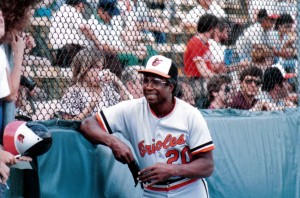
Sadly, not all of my encounters with the men who played you were as encouraging as meeting “The Earl of Baltimore.” Through my attempt to meet Frank Robinson, you taught me the valuable lesson that not everyone who wears your uniform is a hero to be looked up to.

While it is entirely possible that the outcome would have been different on another day, my attempt to meet Frank Robinson soured my opinion of the man, and taught me a valuable lesson in the dangers of heroes letting you down.
Photo R. Anderson

It was a hard lesson for me to learn at the time, but it has helped me separate talent for the game from being a hero off the field. It is possible to respect what a player can do on the field without expecting them to be perfect off the field.

There are of course players who shine both on the field and off, but you let me see that those people are exceptions to treasure, versus the rule.

My joy in you was not limited to just being in the Ballpark. I spent hours collecting your cards and trying to compile complete sets of them each year. I kept checklists in my wallet to know which cards I needed whenever I would find myself at a card shop. I even tried my hand a running a small card shop in my neighborhood for my friends. Grandstand Cards was my first business venture, but it was far from my last.

Every Saturday I rode my bike to the neighborhood 7-11 for powdered doughnuts, a Sunny-D, some baseball cards, and a comic book. Those were much simpler times. While I cherished those days at the time, I cherish them even more now.

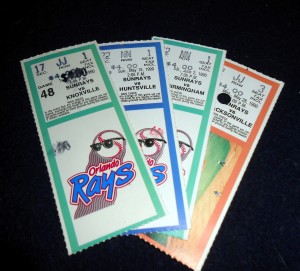
I still have those cards, as well as the team scrapbooks that I made for the Orlando Sun Rays and the Baltimore Orioles. Each time I pull them off the shelf the memories return, and I am transported back to those days of going to the local baseball card shop, and sitting in those well-worn grandstands at Tinker Field.

While I saw numerous Spring Training games at Tinker Field, it was Minor League Baseball that really grabbed my attention and stoked the desires of younger me to work in sports promotions at a ballpark.
Photo R. Anderson

While my three seasons of attempting to play you did not lead to All-Star numbers, you taught me that I could make a career out of telling your story through the various news outlets I worked for.

You even gave me the opportunity to have a full-ride scholarship as a collegiate baseball team manager, which a younger me turned down to go to a different school. It all worked out in the end, and to this day I can still legitimately say that I turned down a full-ride baseball scholarship. I just leave out the part about it not being as a player.

Then there was that 21-inning high school playoff game that I covered as a high school reporter at the old Baseball City Stadium. Man, I sure learned my lesson that night about not leaving the warmth of the press box before the final out. I spent 12 extra innings freezing behind the dugout while my colleagues mocked me from their warm perch.

Despite that unseasonably cold Florida night, and all the other nights shivering in your stands, you taught me that one of life’s simple pleasures is sitting in your Ballparks and getting caught up in the action. You also taught me to never write the lead to an article while the game is still going on, since very few leads are safe once teams are forced to go to the bullpen.

I also learned from you, Baseball, that whenever possible, get a seat in the Ballpark next to the scouts. The times I have been seated in the scout section at Spring Training and Minor League games, I have been entertained by hours of stories of baseball behind the curtains. Sadly, scouts are a dying breed as more and more of your teams are taking a strictly statistical look at how you are played, versus relying on gut feel.

Very little tops a day at the Ballpark.
Photo R. Anderson

Baseball, you have given me the chance to interview many coaches and players. Some of them gave thoughtful answers, while others allowed me to play cliché bingo.

One manager even trusted me enough to write my own quotes for what I thought he would say. To keep it real, I even included some clichés in his quotes. At the end of the season of covering his team, he invited me into his office and said that he had never sounded better than he did when I “quoted him.”

I have thought a lot lately about those post-game interviews under the unforgiving Florida and Texas sun, as well as the interview in the rain that killed my recorder right after I transcribed the quotes. On that day Baseball, you taught me to never rely solely on a recorder, but to write down quotes in real time as well.

Just when I think that you have run out of things to teach me, Baseball, you give me new lessons through this delay in the action brought about by COVID-19. Through the virus you have taught me that player strikes are not the only thing that can cause the games to stop, and that we should not take you for granted when you do return.

More importantly, Baseball, you have reminded us that there are more important things than you, and your other sport siblings. Taking care of ourselves and others is far more important, no matter how badly we want to throw caution to the wind and cram inside your hallowed halls and watch you “play ball” once again.

The Atlantic League of Professional Baseball was the first to use a pitch clock when the Sugar Land Skeeters and other teams implemented it as part of a test with Major League Baseball..
Photo R. Anderson

When you do return, Baseball, either this year, or next year, some people will no doubt continue to complain that your games are too long, that pitchers need to not take so long between pitches, and that umpires need a robotic voice in their head telling them how to call balls and strikes.

Ignore those people, Baseball, and try to resist the calls to constantly tinker with your game. Part of what makes you perfect are your perfect imperfections, and the fact that there is no game clock to say when the game ends.

Baseball, you will come back stronger, and will once again fill those summer nights with the sights, sounds and smells, of the National Pastime.

Hang in there Baseball, I know we will see each other again soon when it is safe to do so. Until then, thanks for the memories you have given me so far, and thanks in advance for the memories yet to come.

Now if you’ll excuse me, this trip down memory lane has me craving some powdered doughnuts and Sunny-D.

Sincerely yours,

Ryan

Copyright 2020 R. Anderson

Remembering our Heroes (Past and Present) on Memorial Day

Today is Memorial Day. I say that with confidence after checking a calendar to confirm my suspicions. Normally, I would have no trouble at all remembering that the last Monday of May is set aside as a day of remembrance, and a time to honor the men and women who died while serving in the United States Armed Forces.

However, in this newfound time when one day can just roll into the next and be called MonTueWedday, it never hurts to check a calendar for guidance as society charts new territory. This potential side effect of not knowing what day it is comes as much of the world is sheltering in place and honoring the calls to social distance as we unite as one in the battle against the COVID-19 virus which has killed nearly 100,000 Americans.

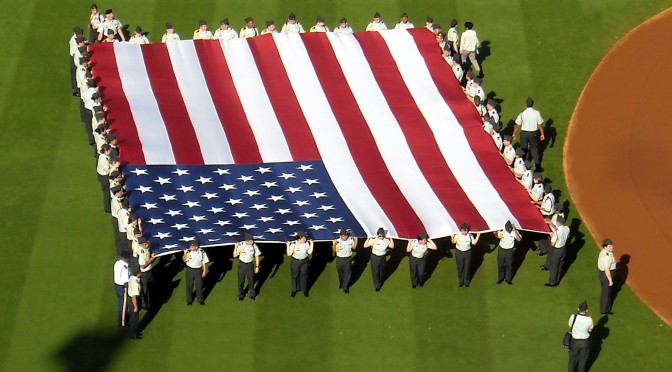
Large flags and camouflage hats mark Memorial Day across Major League Baseball each year.
Photo R. Anderson

In the past, Memorial Day weekend acted as the unofficial start to summer and involved packed beaches and an overabundance of sports to watch. The weekend also lent itself to copious amounts of meat to cook over an open flame.

While I enjoy baseball, beaches and barbecue, for me, the highlight of the extended Memorial Day weekend has always been as the announcer used to say “Sunday, Sunday Sunday.” I would awake before the sun to catch the Monaco Grand Prix, and then switch over to the Indianapolis 500 before ending my day of nonstop auto racing with the Coca Cola 600.

The times that I was not watching racing, I could catch numerous baseball games from coast to coast.

As a sign of unity during troubling times, the U.S. Navy’s Flight Demonstration Squadron, the Blue Angels, and the Air Force’s Air Demonstration Squadron, the Thunderbirds, flew over several U.S. cities to honor front line workers.
Photo R. Anderson

That all changed this year. Thanks to COIVD-19, the Monaco Grand Prix and the Indianapolis 500 were not run Memorial Day weekend.

The Coca Cola 600 did take place yesterday, but the stands were empty of the thousands of fans who usually soak in the action. Additionally, there is no joy in Mudville since baseball is still sidelined by the virus.

The NHL and the NBA suspended their seasons in March with no set timetable on when they will return to action. There will be increased drum beats in the coming weeks for sports to return. Leagues are hemorrhaging money and will want to try to recoup as much revenue as they can.

Owners will say that they are doing it for the fans, but many surveys have noted that a lot of sports fans will not feel comfortable heading to an event for a while. Athletes are also becoming more vocal in their opposition to returning to play until they can be assured that it is safe to do so.

So, it is on this Memorial Day that instead of rooting for one’s favorite team, the world has a common enemy to unite behind. The world is at its best when it works together, and there has perhaps been no greater battle than the one it currently finds itself in. Millions of Americans are working from home, alongside children who are learning from home.

Millions more Americans have lost their jobs and are questioning when things will return to the good old days known as before March 2020. It is entirely possible that the good old days as we knew them are years away from returning.

Veterans with underlying health conditions, and the Navajo Nation whose language was used as an unbreakable code in World War II are being hit especially hard by COVID-19, so it is fitting on this day of remembrance that we not only remember their sacrifice in time of war but that we pray for their safety in this battle against the virus.

The Los Angeles Memorial Coliseum was commissioned in 1921 as a memorial to veterans of World War I.
Photo R. Anderson

States are starting to ease restrictions on what people can do in an effort to spark the economy. There will no doubt be temptation to push the limits and go out and have as normal of a Memorial Day as possible, and just hope for the best in terms of avoiding infection from COVID-19.

Some politicians will call this the need for people to exercise pent up demand to get out and do normal things. Other politicians will call such actions reckless and an endangerment to others around them. Countries that have reopened early have seen their number of cases go up in some instances. There is no magic formula for deciding when to roll out a “Mission Accomplished” banner.

Throughout all of this, it is crucial to remember that the power resides with individuals to decide when they want to rejoin the economy. Just because something is open, it does not mean that people are forced to go there. COIVD-19 is a relentless scourge that takes no notice of a person’s sports affiliation, political leanings, or any other factors in its path of destruction.

Uncle Sam knew back in World War II that the world needed more moxie. While it may have been a soda slogan back then, today the need for moxie is stronger than ever as the world tries to fight a common public health enemy.
Photo R. Anderson

In past challenges that are remembered on Memorial Day, like World War II, citizens rallied to do all they could to defeat the common enemy.

My grandmother built battleships in Georgia, and my grandfather fought at Pearl Harbor, among other battle sites. My grandparents, and millions of other people’s grandparents, parents, brothers and sisters have done similar things when called to duty.

Memorial Day reminds us that Americans owe their freedom to the sacrifice made by countless individuals who came before us, and to the people who are currently serving in the armed forces. The sacrifice of those who came before us who we remember on Memorial Day made us who we are. Sacrifices people make now to contain the virus, is a gift we can leave for the generations that come after us.

The COVID-19 virus has shown us that a pair of scrubs, a retail vest, or an apron can be just as heroic as camo. Sports on Memorial Day will return, but this year on this day of remembrance instead of complaining about a lack of live sports, stop to think about the health care workers, the police officers, the fire fighters, the grocery store workers, the meat packers, the restaurant cooks, the warehouse fulfillment workers, the delivery drivers, and every other person across the globe who is doing their best to keep the world going.

Many of us are taught as kids that super heroes wear capes and masks. That is true, but the capes are invisible lest they get in the way of the work being done by the people on the front lines, and the masks are there to both protect the identify of the super hero, as well as to protect those around them. Lucky for us our modern day heroes are working on Memorial Day, and every other day keeping us safe from enemies seen and unseen.

Now if you’ll excuse me, I need to go pick up some groceries curbside and thank some front line workers.

Copyright 2020 R. Anderson

Building my Ballpark Bucket List for When the World is Open Once Again Part 1

For the past five years, I have traveled an average of one to two weeks a month. During this time, I saw a lot of hotel rooms, drove a lot of rental cars, and most impressively I mastered the art of snagging a coveted aisle seat close to the front of a completely full Southwest Airlines flight. On those rare occasions when the seat next to me on the flight was empty, I felt like I had won the lottery as I crisscrossed North America during the carefree days before COVID-19.

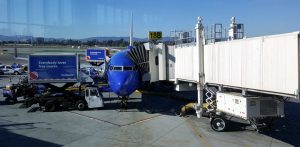
Over a five-year span I logged a lot of miles in blue planes just like this one.
Photo R. Anderson

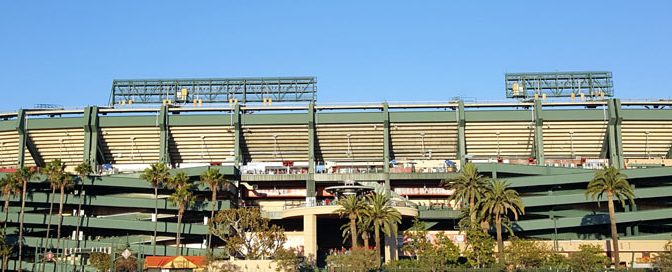
Many of those trips involved visits to Ballparks and other sporting venues. I saw Major League games at Dodgers Stadium, Angels Stadium, Tropicana Field and Coors Field. I caught Minor League games in Colorado Springs and Port Charlotte, among other places.

For good measure, I even visited four hockey arenas. While Coolio sang of living in a “Gangsta’s Paradise,” I was truly spending most my time living in a sports fan paradise.

The era of the non-retractable roof Ballpark as fallen out of fashion in recent years. Tropicana Field, home of the Tampa Bay Rays, is truly the last of its kind. Based on historically low attendance some might argue that the Trop was the first Ballpark to engage in social distancing.
Photo R. Anderson

Of course, that carefree ability to cram into full arenas, full ballparks, and even full blue Boeing 737s, has been put on hold for the foreseeable future thanks to the COVID-19 virus.

Large gatherings of people at sporting events would be the perfect storm for community spread of the virus. So out of an abundance of caution, fans will not be allowed to congregate for a while once the sports world reopens.

I can totally respect that since, a) I really don’t feel like getting sick just so I can see a game in person, and b) drinking Dr Pepper with a straw through a hole in my officially licensed MLB face covering does not sound like fun.

Constellation Field in Sugar Land, TX has a scoreboard that reminds people what state they are in. This can be helpful for fans who become disoriented from the heat.
Photo R. Anderson

Although I will not be able to see live sports any time soon, that does not mean that from the relative safety of my gigaplex I cannot compile a Bucket List of the ballparks I want to visit once the green light is given to safely return to mass gatherings.

My Bucket list of Ballparks I wanted to visit was already pretty extensive. However, as I have had much time at home to contemplate, I have had the chance to add to it. For the purpose of this exercise I have selected a Top 10 list of Ballparks I want to see when the world reopens.

The list is broken up into five Ballparks that I want to visit again, and five Ballparks that I want to see for the first time. The Ballparks include facilities at the Major League level, the Minor League Level, as well as the Independent League level.

For the first installment of our series, I have chosen to look at the five Ballparks I want to see again. While I will always enjoy finding new Ballparks to visit, I also enjoy returning to some old favorites. The five Ballparks on this list are ones that I would visit for every game if I had the chance.

Constellation Field, Sugar Land, TX

A mascot with a water gun is the perfect combo for baseball in triple degree heat.
Photo R. Anderson

Located just a smidge too far away from the gigaplex for me to be a season ticket holder, Constellation Field plays home to the Sugar Land Skeeters of the Atlantic League of Professional Baseball.

With reasonable prices on tickets, food, and souvenirs, a game inside Constellation Field won’t break most piggy banks. The action on the field is exciting, and the mid-inning promotions staff provides the usual Minor League Baseball standards to keep the fans entertained.

I do take issue with the team getting rid of the carousel in Center Field a few years ago, but aside from that, this little ballpark is pretty much perfect for catching a game. The Ballpark is in Texas so it does get hot during day games in the summer, but there are thankfully ways to stay cool including a splash pad and air conditioned areas.

Tropicana Field, St. Petersburg, FL

Though it is criticized by many, I find Tropicana Field to be a pleasant place to catch a game while also feeding some wildlife.
Photo R. Anderson

Tropicana Field gets a lot of flak from a lot of people. They complain about the location of the facility as well as the fact that it is one of the last of the multi use large domes that once dotted the sports landscape from coast to coast.

While domes in Houston, Seattle, and Minnesota have given way to single use baseball fields, courtesy of the Ballpark renaissance kicked off by Oriole Park at Camden Yards, Tropicana Field stands as a reminder of what a certain era of Ballpark design looked like. While the Trop has haters, I actually like the Ballpark. It was one of the first facilities to allow people to bring in their own food and also offers an unlimited refill policy on soft drinks.

Paying tribute to the days when the Tampa Bay Rays were known as the Devil Rays, there is even a Ray touch and feeding tank in center field. Plus, it is hard to beat catching a game in air-conditioned comfort and staying dry during those hot and wet Florida summers that last from March to November.

Coors Field, Denver, CO

During my lone trip to Coors Field I hit a triple with a Pepsi, a hot dog, and a bobblehead.
Photo R. Anderson

Next up is Coors Field, home of the Colorado Rockies. I have only had the pleasure of attending one game at this Ballpark. It was a day game during a Colorado heat wave and the vendors were selling equal amounts of beverages and sunscreen.

From what I could see through my sun screen irritated eyes, the Ballpark has a lot to offer. The game I attended included a bobblehead giveaway, as well as a race between people dressed up as the presidents on Mount Rushmore. Not too shabby.

Coors Field made the list, based on my desire to catch a night game at the Ballpark and to have time to explore more of the amenities without feeling like I was every bit of a mile closer to the surface of the sun.

Dr Pepper Ballpark, Frisco, TX

Dr Pepper Ballpark in Frisco, TX is a great venue to catch a game, just try to avoid day games in August.
Photo R. Anderson

Dr Pepper Ballpark is home of the Frisco Rough Riders, who are the Double A affiliate of the Texas Rangers. It has been several years since I made the drive up to the Ballpark located in a suburb of Dallas, but it is a drive well rough making.

The Ballpark features bullpens that are surrounded by seats so fans can really get a close look at the pitchers warming up. The facility also includes a lazy river and a pool, which is perfect for the sweltering heat that the Dallas Metroplex is famous for.

One major plus of Dr Pepper Ballpark, is the availability to have a cold and refreshing Dr Pepper. I am sure there are people who do not mind Pibb Xtra, but for me it has to be Dr Pepper. With the headquarters for Dr Pepper being located next door in Plano, TX, I feel pretty confident that the Ballpark will keep serving Dr Pepper for years to come.

Blue Wahoos Stadium, Pensacola, FL

Pensacola’s Blue Wahoos Stadium is a true gem among Ballparks and has a waterfront view that can often include spotting the Blue Angels returning from an Air Show.
Photo R. Anderson

Blue Wahoos Stadium is home to the Blue Wahoos, a Class Double A affiliate of the Minnesota Twins. The Ballpark is one of my favorites for many reasons. The location right on the bay is hard to beat.

The concessions are top notch. The Ballpark itself is beautiful and has been named best ballpark in the country by numerous outlets, including being a three-time recipient of the Southern League Ballpark of the Year award. The Ballpark is the smallest facility in the Southern League and this creates an intimate fan experience.

I try to visit Pensacola as often as I can. When the world reopens, and it is safe to move about the country once again, Pensacola will be one of the first trips that I make. Southern League Baseball has always been my favorite league since catching Orlando Sun Rays games with my mom at Tinker Field in Orlando. The Blue Wahoos allow me to keep that tradition alive once every other year or so.

These five Ballparks are definitely places I would go to again and again. There are other Ballparks that I could have included as well on my list of places I love catching a game at. Be sure to return Friday when I will reveal the five venues that I want to visit for the first time.

Now if you’ll excuse me, all of this talk about Ballparks has me craving a hot dog and some nachos.

Copyright 2020 R. Anderson
NASCAR Provides First Look at What the Return of Sports Could Look Like as Other Sports Sit Impatiently in Neutral

Brad Keselowski started on the pole on May 17, 2020 when NASCAR returned to live racing after a nearly two month hiatus.
photo R. Anderson

When the history books are written to describe the era of COVID-19, it is likely that yesterday, May 17, 2020, will be remembered as the day that sports returned to America.

Okay, to be fair, all sports did not return yesterday. Declaring the “all clear, come and play ball y’all” is likely months away from occurring. Factor in a return to wide open, stadium rockin’ sports as they were prior to March 2020, and some experts say that could be a year or more away.

Still, yesterday will be remembered as the day that NASCAR told their drivers to start their engines, and the fans to stay home and watch. It is easy to see how NASCAR was the first sport to draw up a game plan for a return to competition.

Kyle Busch is set to run seven races in 11 days in all three NASCAR series as part of the sport’s return to live competition.
photo R. Anderson

Drivers sit alone in their 3,000 plus pound octane 93 fueled chariots. So, even during rubbing and bump draftin’, social distancing can be maintained.

Throw in helmets, and protective gear for the pit crew members, and you have yourself a ready-made example of responsible sport in the COVID-19 era. At least that is how the plan is supposed to work.

While social distancing works in NASCAR, other sports leagues will find it harder to show that the athletes are separated by the recommended Center for Diseases Control (CDC) guidelines of six feet of separation. The next sport on the clock to try to return a fan-free viewing experience to the world is Major League Baseball.

Baseball has already returned in South Korea where the season opened in empty ballparks, followed by ballparks allowing up to 1,000 fans to attend from a safe social distance.

It is hard to imagine a scenario where Major League Baseball says the first 1,000 people to the ballpark are allowed inside. It is safer to say, that the only people sitting in the stands for the foreseeable future whenever baseball does return will be team employees.

While no exact timeline has been established for the return of baseball, when it does return it is likely that the pregame lineup exchange at home plate will be eliminated.
photo R. Anderson

I have said this before, and it bears repeating, I miss baseball. However, I do not miss baseball to the point that I want to see players, umpires, and other team personnel put at undue risk of exposure to a virus that currently has no cure just so I can have a few hours of live sports during my work from home time.

Blake Snell, the 2018 Cy Young Award-Winning pitcher for the Tampa Bay Rays, made waves when he commented on his Twitch channel last week that playing an abbreviated baseball season with a pay cut was not worth the risk to his health for future seasons. Based on estimates of the proposals being negotiated between MLB management and the player’s union, Snell would earn around $2.3 million instead of $7 million in salary for playing what would amount to at best an 82-game season.

To be fair, athletes risk injury every time they take the field. However, one can certainly argue that risking your pitching arm and needing to miss a season because you are recovering from Tommy John surgery is entirely different than risking your health because of a virus.

Snell’s candid assessment of needing to look at his life after this season, versus playing this year and risking his health, drew the usual round of negative comments with people calling him “entitled,” and that he should just “shut up and play.”

After Blake Snell drew criticism for voicing concerns about returning to play baseball, fellow All-Star Bryce Harper noted that Snell made public feelings that many players are pondering in private in regards to the risk of playing baseball too soon to their long-term health.
photo R. Anderson

A pair of All-Stars, in Bryce Harper and Nolan Arenado, came to Snell’s defense by noting that Snell went public with what many players are thinking in private related to needing to look long and hard at the risks associated with returning to play baseball this year.

As part of a return to the ballpark plan reported by ESPN, players and all other people involved in the games would be tested for the COVID-19 virus several times a week to allow any potential outbreak to be snuffed out at the source. Under the plan to mitigate the spread of the virus , according to the ESPN report, players, would also be banned by fist bumping, high fiving, and spitting.

However, it is unknown whether players will still be allowed to bang on trash cans in the dugout. Too soon Astros fans?

MLB is targeting a return to play in early July. It is highly likely that the return will feature fireworks and other festive celebrations as the “Boys of Summer” play the National Pastime once more. Any return to play scenario needs to allow players to choose whether they want to return, or if they are willing to forfeit their salary in order to focus on their health for future seasons.

MLB is targeting a return to play in early July. It is highly likely that the return will feature fireworks and other festive celebrations as the “Boys of Summer” play ball once more.
photo R. Anderson

Assuming that MLB does the right thing and allows players to choose to sit out the season, that creates the question of why not just wait until next year to play at all.

Can an 82-game season with some of the top players on each team choosing to not play really be considered legitimate?

Of course, the answer, as it usually does, centers on money. Even without fans in the stands team owners and broadcast networks can make money on games.

Another footnote in the year of COVID-19 history book should not only include the day live major sports returned with NASCAR, but should also include the day that the MLB potentially chose finances over safety. Of course, that financial risk versus personal risk calculus is being performed across the globe as multiple industries look to reopen in the middle of a pandemic.

Millionaire baseball players aren’t the only ones who will need to perform a risk trade when it comes to returning to work. Employers at all levels need to be sensitive to the concerns raised by workers, and where possible accommodations need to be made to protect both their health and their jobs.

I miss going to see Swatson and the rest of the Sugar Land Skeeters. I look forward to a time when I am once again watching them from inside the ballpark.
photo R. Anderson

I am eternally grateful to the men and women working at the grocery store who bring my order out to my car and allow me the opportunity to stay safely socially distanced. Too often, some elements of society look down on workers in retail, transportation, healthcare and hospitality.

Society owes a huge debt to all of the people on the front lines. When the pandemic is over, the people who kept us safe, fed, and tended to health-wise, should be the first ones allowed inside the sporting venues as a show of thanks from a grateful nation.

Until then, sports leagues need to temper their enthusiasm for returning to play. We all miss sports. However, it would just take the death of one player to show that the risk was not worth it.

Now if you’ll excuse me, my work from home fury coworkers are meowing for some kibble.

Copyright 2020 R. Anderson
COVID-19 puts the Sports World in an Extended Timeout

The world of professional baseball has been dark since March. Discussions are underway to return players to the ballparks in a shortened, fan-free season. Photo R. Anderson

Thanks to the arrival of the COVID-19 virus, for many people right now it feels like up is down, and down is up. The virus has also introduced new terms like, social distancing and contact tracing into our vocabularies. As part of its destructive path into everyday life COVID-19 has caused the world of sports to grind to a halt as player and fan safety was given the proper level of respect.

The COVID-19 outbreak tested leagues in a way that many sports had never experienced. Social distancing requirements, as well as limits on crowd size, led to the cancellations of the XFL, NBA, NHL and almost all other sports leagues. On April 10, 2020 the XFL announced it had suspended operations indefinitely and laid off all league employees due in part to financial losses as a result of COVID-19.

The Olympic Summer Games in Tokyo were delayed by at least a year. All NCAA spring sports tournaments, including the Men’s and Women’s Basketball Tournaments were cancelled. Major League Baseball ended Spring Training early, and delayed the start of the season. The leagues that continued to hold competitions did so without fans in attendance as they tried to balance social responsibility with the public’s appetite for live sports.

With most major sports leagues shutdown due to COVID-19, sports fans looked for any port in the storm to quench their thirst for live competition. The American Cornhole League provided many fans with just such an outlet.
Photo R. Anderson

Before going any further, it is important to note that shutting down mass gatherings, like sporting events, was the right call.

One need only look at the amount of cases that spread out from a convention in Boston to know how quickly the virus can spread to know that mass gatherings are simply not prudent at this juncture. Even with social distancing, the number of cases, and the number of fatalities continue to rise. Were sports allowed to continue in full stadiums and arenas, there is little doubt that the case and death count would be much higher.

It should also be said that the inconvenience of not having live sports to watch is trivial compared to the real effects of COVID-19 that many people are facing across the world through losses of jobs and in extreme cases losses of loved ones.

Although the major sporting leagues have been shutdown for nearly two months, there are rumblings building to resume sports, albeit in empty stadiums without fans. NASCAR, which kept fans entertained through simulated races, is set to resume racing in empty tracks on May 17, 2020. Five years after the first game in Major League Baseball history was played in Baltimore without fans, MLB is negotiating with the player’s union to try to gain approval to host a truncated 82 game season in empty ballparks starting in July.

NASCAR is set to resume racing without fans in attendance on May 17, 2020. Time will tell whether the fans return for the Daytona 500 in February at Daytona International Speedway.
Photo R. Anderson

All of these efforts to resume sports without fans show a desire for the governing bodies of the respected sports to explore any and all means for the show to go on. This effort to resume is driven in large part so the leagues can recoup some sort of financial payday.

While a return to live sports on television, even sports without fans, would be welcomed by many, one has to ask whether leagues risk diminishing the product by forcing reduced schedules on fans and trying to call it a full season. Should a World Series Champion that only played an 82-game regular season be considered as talented as teams of the past who prevailed over the course of a season that was twice as long?

Additionally, as part of any discussion on the resumption of live sports one must also ask whether players are being put at undue risk by being asked to travel from city to city, and potential virus hot spot to hot spot, just so the show can go on in some form or fashion.

To be clear, like most sports fans, I miss being able to unwind at the end of the day by watching a game on television. However, I am not sure that I miss live sports enough that I am willing to support putting my favorite athletes potentially at risk of catching, or spreading, a virus that currently has no cure just so they can bring me a few hours of entertainment.

As professional sports look at ways to resume during the era of COVID-19 one has to wonder how exactly a football huddle with social distancing would look.
Photo R. Anderson

Aside from needing to address player safety as part of any path to resumed competition, leagues must also consider that airing games without fans leagues may hasten the trend of people choosing to watch games from the comfort of home versus battling thousands of people to get to a seat so far from the field that they are basically watching the game on the big screen anyway. Sure, the made for TV sports are better with screaming fans, but there is something to be said for watching at home where the snacks and the bathrooms are both a lot easier to get to.

With NASCAR and MLB looking to get their seasons going, the eyes of the world of sports turn their focus to football. Even if one accepts the prospect of empty football stadiums, it is hard to fathom how players could be in the trenches on the gridiron and not risk exposure to COVID-19.

Exactly how does one huddle with six-feet of separation? Even a scenario where players are wearing masks does not seem feasible. It is hard to think that a wide receiver can run full speed down the sideline wearing a N-95 mask under his face mask. The only possible solution would be to equip all player helmets with a clear shield that covers their mouth and nose, but even that is a stretch.

College Football is one of the sports on the bubble for a return based on a NCAA position on the need for students to be on campus before sports can resume.
Photo R. Anderson

College sports face their own hurdles for resuming in the fall. The NCAA has said that sports will not resume unless on campus classes have also resumed. The implication being that if the college is not deemed safe enough for students to be on, then the athletes should not be expected to have to play there.

There is too much money involved in college football to think that a work around of some sort will not be found to play games if the COVID-19 virus is still running rampant across the country come August. The topic of College Bowl Games and the College Football Playoffs is another issue that is bound to get a lot of attention in the coming months based on the millions of dollars at stake.

It is entirely possible that the sports landscape will never return to the levels that it was at before the world of sports was shut down by COVID-19. By adopting an attitude that everyone is in this together, those most impacted by the global timeout in sport can better weather the storm. It is crucial to keep in mind that the current situation is also only temporary.

Perhaps James Earl Jones’ character Terence Mann in the movie Field of Dreams said it best when he said “People will come Ray. The one constant through all the years, Ray, has been baseball. America has rolled by like an army of steamrollers. It has been erased like a blackboard, rebuilt and erased again. But baseball has marked the time. This field, this game: it’s a part of our past, Ray. It reminds us of all that once was good and that could be again. Oh…people will come Ray. People will most definitely come.”

Yes, baseball and other sports will resume at some point, and people will indeed come. How many people are allowed to come over the next few years based on social distancing remains to be seen.

Now if you’ll excuse me, I have some masked competitive cornhole to watch on the Ocho followed by some lawnmower racing.

Copyright 2020 R. Anderson

Looking Back at the First Baseball Game Played in an Empty Ballpark

Editor’s Note: As the world of sports continues an extended timeout due to the COVID-19 virus, we look back on a column from April 29, 2015 which captures what the future of sport may look like for the foreseeable future as Major League Baseball and other sports look at ways to “Play Ball” without fans.

Earlier today, the Baltimore Orioles and Chicago White Sox tested the baseball equivalent of the old adage about what happens when a tree falls in the forest and no one is there to hear it.

Instead of a forest though, the two teams were in the nearly empty Oriole Park at Camden Yards for a Major League Baseball game in which the Orioles defeated the White Sox 8-2.

The National Anthem was still played, and a stretch was still made in the seventh inning complete with the John Denver song that has entertained Birdland for the better part of four decades; but something was definitely missing.

The Baltimore Orioles became the first Major League Baseball team to host a game with locked out fans. Photo R. Anderson
The Baltimore Orioles became the first Major League Baseball team to host a game with locked out fans.
Photo R. Anderson

With only players, team officials, some scouts and members of the media allowed inside the Ballpark, the game marked the first time in MLB history that fans were locked out of the Ballpark when a game was going on.

While there were fans who gathered to watch the game from outside the gates, no ticketed fans were allowed through the turnstiles.

With no fans inside the Ballpark, home run balls and foul balls went uncaught. Parts of the Ballpark were so silent one could likely hear a pin drop. Orioles Skipper Buck Showalter noted after the game that it was so quiet that he could hear the bullpen phone ringing from the other end.

As strange as playing in an empty Ballpark is, today’s game was merely one of many things to occur during a strange week for the Orioles who briefly told fans that they could not leave the Ballpark on Saturday night and then saw games on Monday and Tuesday completely cancelled.

Baltimore Orioles center fielder Adam Jones and his teammates played a game in an empty Orioles Park at Camden Yards after MLB officials deemed it was unsafe to allow fans to attend. Photo R. Anderson
Baltimore Orioles center fielder Adam Jones and his teammates played a game in an empty Orioles Park at Camden Yards after MLB officials deemed it was unsafe to allow fans to attend.
Photo R. Anderson

The Orioles will also fly south this weekend for a “home” series at Tropicana Field against the Tampa Bay Rays after the Rays voiced concerns about visiting Baltimore for the scheduled series between division rivals.

The reason for all of the juggling of the schedule is non-baseball related.

Protests are occurring in the neighborhoods surrounding the Ballpark, which have led to the city of Baltimore imposing a 10 p.m. curfew.

Even with all of the efforts to shorten the pace of play, a regular MLB game could not be finished in time for fans to all get home before 10 p.m. Ironically though, the game in the empty Ballpark was finished in just a little over two hours, which might lead some to believe that the ultimate way to shorten the game is to lock the fans out all the time.

With police and National Guard troops trying to restore order within Baltimore to prevent future acts of violence and looting, the Ballpark will stay silent until it is deemed safe to once again play ball.

Part of the freedom Americans have is free speech and the ability to show displeasure with things in a way that very few other countries have.

The Orioles will fly south this weekend for a "home" series at Tropicana Field against the Tampa Bay Rays after the Rays voiced concerns about visiting Baltimore for the scheduled series between division rivals. Photo R. Anderson
The Orioles will fly south this weekend for a “home” series at Tropicana Field against the Tampa Bay Rays after the Rays voiced concerns about visiting Baltimore for the scheduled series between division rivals.
Photo R. Anderson

But there are limits to the protection of free speech. Just as it is illegal to yell “fire” in a crowded theater when there is no fire, it is also illegal to burn buildings and other property as a form of protest.

The violence and destruction over the past few days takes away from those members of society who are trying to peacefully demonstrate and have their voices heard.

As is almost always the case, a small minority of protestors escalated things to the level of violence. So, any generalizations about the behavior of all of the protestors would be false. Sadly, the actions of the few far out shadow any peaceful message that the many may have been trying to share.

And while a baseball game being played in an empty Ballpark is likely something that will be forever mentioned as part of Baseball lore and may even warrant a small exhibit at the Baseball Hall of Fame, it is those few individuals who turned to violent protests that caused the community of Baltimore to lose the economic benefit from at least six baseball games.

Granted two of the cancelled games will be made up as a doubleheader later in the season, but the fact remains, the protests took money out of people’s pockets.

Bars and restaurants near the Ballpark did not benefit from the game day crowds and the various vendors who sell peanuts and Cracker Jacks missed out on income from the games as well.

Hopefully the Orioles are able to come home to roost by the time of their next scheduled home game. However, Major League Baseball has made it very clear that fans will not be allowed inside the Ballpark while protests are still actively occurring on the streets of Baltimore.

While it is certainly unfortunate that games are being played without fans and Camden Yards, the safety of the thousands of fans had to be taken into account.

So, while it was a difficult decision to move out of Baltimore, it was likely the only decision MLB felt they could make.

When the dust settles it is the images of the burning police cars and looting that most people will remember more than any peaceful demonstration that may have occurred.

In previous times of despair, such as the aftermath of the Boston Marathon Bombing, baseball has served as a way to unite the community and help heal wounds.

Hopefully baseball in Baltimore can once again unite the community to focus on being one Baltimore cheering together for the men wearing the orange and black.

That is not to say that Esskay hot dogs, and crab cakes can solve all of societies problems. Nor is diminishing the rights of citizens to engage in peaceful demonstrations to stand up when they feel they are being wronged.

Orioles first baseman Chris Davis was one of two players to hit a home run with no fans there to catch it. Photo R. Anderson
Orioles first baseman Chris Davis was one of two players to hit a home run with no fans there to catch it.
Photo R. Anderson

Regardless of whether one agrees with the protesters or not, one should agree that they have the right to demonstrate within the boundaries of the law.

It is when those protests fall outside the boundaries of the law that action, even the difficult action of locking fans out of a Ballpark, must be taken to ensure that innocent people are not harmed.

Now if you’ll excuse me, I need to see what sporting event will be aired next without any fans.

Copyright 2015 R Anderson



Spies Like us? MLB Investigation Unearths Vast Cheating

In the 1964 movie Goldfinger, James Bond, played by Sean Connery, finds himself in the cross-hairs of a rather delicate situation after he has been strapped to a table with a laser pointed at him.

It is while he is in this predicament that Mr. Bond, James Bond utters the famous line, “Do you expect me to talk?” to which his captor Auric Goldfinger, played by Gert Frobe, gleefully gives the equally famous reply “No, Mr. Bond I expect you to die.”

Before going any further it should be noted that James Bond did not in fact die by being lasered in half and went on to have various other fictional adventures.  

I was recently reminded of the classic scene from Goldfinger while reading stories about Major League Baseball’s (MLB) investigation that placed the Houston Astros in the cross-hairs of one of the largest cheating scandals in the history of the sport.  

The details of the findings read an awful lot like something that could have come off of the typewriter of Ian Fleming, the man behind the James Bond novels, and also the author of Chitty Chitty Bang Bang.

We will delve more into the second book in a bit.

Et tu, Orbit? After the findings of a report outlining a far reaching, season long, vast “can”spiracy cheating scandal within the Houston Astros organization one has to wonder, what did the mascot know, and when did he know it?
Photo R. Anderson

For those who may not be aware, the MLB commissioner’s office recently completed an investigation into cheating allegations levied against the Houston Astros related to games played in the 2017 season, which also happened to be the same year that the Astros won the World Series.

As a result of those findings, three managers and a general manager who had ties to the Astros during the 2017 season have been fired leaving the Astros, Red Sox, and Mets searching for new leadership mere weeks ahead of the start of Spring Training. The Astros were also forced to forfeit four draft picks.

According to the report, the cheating involved a series of high tech and low tech means to steal signs from opposing teams in order to give the Astros an advantage at the plate by knowing what pitches were coming.

As Kevin Costner’s Crash Davis demonstrated in Bull Durham, when the hitter knows what is coming, the ball coming off of the bat travels so far that it ought to have a flight attendant on it. Or to use the sabermetrics lingo, “epic launch angle equals the ball traveling many feet.”

Okay, so every ill-gotten hit by the Astros during the 2017 season wasn’t an out of the park dinger, but the scheme did allow them to hit the ball extremely well, and extremely often, when playing in their home ballpark.

So how does one alter the outcome of the home games they play in the 21st Century?

Houston Astros 2nd Baseman Jose Altuve, shown during a 2016 Spring Training game against the Philadelphia Phillies at Osceola County Stadium, was chosen as the 2017 American League MVP. Now, thanks to the release of the findings of the MLB Commissioner’s office, fans will forever be wondering how much of that MVP year was skill based. and how much of it was aided by an intricate cheating scheme that involved a camera, a bat and a trash can to alert batters on the type of pitch that was coming.
Photo R. Anderson

According to the allegations outlined in the MLB report it involves a couple of fairly simple, albeit highly unethical steps.

Step 1, place a camera in center field and aim it directly at the crotch of the opposing catcher.

Step 2, make sure that the feed from said catcher crotch cam can be viewed within sunflower seed spitting distance of the dugout.

Step 3, find a bat, these are usually lying around most MLB dugouts.

Step 4, find a trash can. This can be plastic or metal depending on preference.

Step 5, take bat and go chitty chitty bang bang on trash can whenever the catcher crotch cam indicates that the catcher has called for an off-speed pitch such as a breaking ball, or a curve ball. 

Step 6, repeat Steps 1-5 for all batters.

Remember to only bang the can slowly during off speed pitches, no bang on the can means they are bringing the heat.

To be clear sign stealing is of course as old as the game of baseball itself.

However, it is the lengths that the Astros went to, and the use of digital devices that caused them to run afoul of the commissioner’s office.

In Scooby Doo parlance the Astros may have continued to get away with their cheating being their dirty little secret had it not been for what they would likely call a “meddling” former player from the 2017 team going public with what he knew.

By blowing the lid off of the trash can so to speak, he went against centuries of baseball lore where one only whispers the dirty deeds and things are policed internally and civilly through bench clearing brawls where the poor relief pitchers have to travel the length of a football field just to arrive after the fight is over before traveling another football field’s worth of distance back to their seats in the bullpen.  

Many people have gone on record as saying that the cheating should have remained hidden, while others have applauded the former player for sharing a welcome breath of honesty in a dishonest world.

As is the case for all things, history will decide how he will be remembered for his actions. Despite federal protections and other statues whistleblowers often face more blowback than a fastball up and away to keep the batter from crowding the plate.

Of course, the 2017 Astros would have known when to crowd the plate, and when to back away thanks to the tone of the two bangs on their trusty trash can.

There is no way of knowing whether the Astros could have won the World Series in 2017 without cheating, but the fact that they did win it while cheating likely leaves many baseball fans in cities like Los Angeles (lost to Astros in World Series) and New York (Lost to Astros in American League Championship Series) wishing they had a laser to strap people to so that they could get some answers.

To be clear I am not suggesting that anyone build an evil lair in an abandoned warehouse and construct a table made out of gold with a high-powered laser attached to it for interrogating people.

Instead, just look on a vacation home rental site under the heading of laser equipped evil lairs.

Again, I am joking but if anyone has an under-volcano lair available the third week of March let me know.

Since the initial release of the report, additional allegations have arisen from the vast shores of public opinion that claim that Astros players wore buzzers on their body to tell them what pitches were coming as a way to give the trash can a night off now and then.

Related to buzzergate, the MLB commissioner’s office noted that no evidence of electronic buzzers or other devices being worn by players was established.

The players implicated by the buzzer conspiracy theorists also deny using them. Despite these protestations of buzzer free play, there are likely to be more allegations made as everything done by players on the Astros for the past three seasons is likely to go under the microscope of crowd sourced group think.

While the investigation into the Astros only centered on the 2017 season, MLB is expected to release their findings on an investigation into allegations that the Boston Red Sox cheated during the 2018 season, which coincidentally was the year that they won the World Series.

Were it not for confirmed cheating by the Houston Astros in 2017, and the alleged but still under investigation cheating by the Boston Red Sox in 2018, the Los Angeles Dodgers very well could have added to their tally of World Series Championships. Instead the Dodger players and fans will be forever left to wonder, what if? Note, the trash can pictured is not the trash can implicated in the Astros’ web of cheat and is only guilty of smelling of discarded Dodger Dog wrappers.
Photo R. Anderson

The loser in both 2017 and 2018 was the Los Angeles Dodgers who very likely could have old wounds opened up that are wider than the Chavez Ravine that holds Dodgers Stadium if it is revealed that the boys in Dodger blue were bested two straight years by teams found to have cheated.

Regardless of the outcome of the Red Sox investigation, it is clear that the public trust in America’s Pastime has eroded somewhat.

Fans will undoubtedly wonder whether the effort they are witnessing on the diamond is from hard work and preparation, or from shortcuts and cheating.

It is not the first time that scandal has befallen the game and in all of the previous cases the game has survived since diamonds are forever.

With another baseball season on the horizon time will tell if the fallout from this scandal merely leaves baseball shaken, or if it gets stirred down to the core.

Now if you’ll excuse me, I am off to watch Goldfinger.

Copyright 2020 R. Anderson